
Appetizers
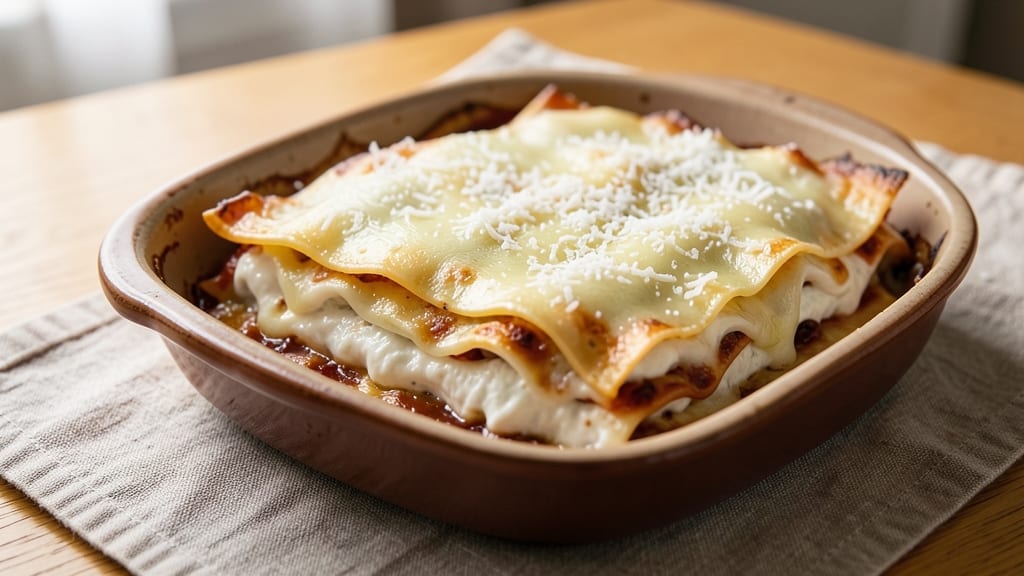
This authentic Italian cheese lasagna delivers the layered tradition and gooey perfection you crave—no shortcuts, just the real deal. 💛 The secret lies in fresh pasta sheets, a rich béchamel sauce, and a perfect balance of ricotta, mozzarella, and Parmesan that melts into creamy, stretchy perfection with every forkful.
I’ve perfected this recipe over years of testing, ensuring each layer works together like a symphony of textures and flavors.
The key to authenticity starts with the pasta—hand-rolled or high-quality dried sheets, never pre-boiled noodles. A velvety béchamel sauce (butter, flour, and milk) binds the layers, while a sprinkle of breadcrumbs on top creates a golden, crispy crust that contrasts beautifully with the tender filling.
Every slice reveals those gooey strata of cheese, where the edges are crisp and the center stays creamy, just like Nonna used to make.
What makes this lasagna truly special is the patience in layering—each sheet of pasta, dollop of ricotta, and fold of cheese must be placed with care. The result?
A dish that’s rich, comforting, and impossible to resist, served with a side of garlic bread and a simple arugula salad to cut through the richness. This isn’t just lasagna; it’s a celebration of Italian home cooking.
Ready in about 45 minutes at 450°F, this lasagna is perfect for family dinners or special occasions. The aroma alone will have everyone gathering at the table, and the first bite will remind you why this classic dish has stood the test of time. Let’s get to layering!
Ingredients for authentic italian cheese lasagna
Fresh pasta, rich cheeses, and velvety béchamel—these are the heart of Nonna's lasagna.
| Ingredient | Amount | Notes |
|---|---|---|
| Fresh Lasagna Sheets 🍝 | 12 pieces | High-quality dried or fresh, no-boil preferred |
| Ricotta Cheese 🧀 | 2 cups | Whole-milk, drained overnight in cheesecloth |
| Mozzarella Cheese 🧀 | 2 cups | Fresh, low-moisture, shredded by hand |
| Parmesan Cheese 🧀 | 1 ½ cups | Freshly grated, aged 24+ months |
| Unsalted Butter 🧈 | ½ cup | European-style, for béchamel |
| All-Purpose Flour 🌾 | ½ cup | For béchamel roux |
| Whole Milk 🥛 | 4 cups | Warm for béchamel |
| Large Eggs 🥚 | 3 whole | Room temperature, beaten |
| Garlic Cloves 🧄 | 4 cloves | Minced, for béchamel |
| Fresh Basil Leaves 🌿 | ¼ cup | Chopped, for béchamel |
| Salt 🧂 | 1 ½ tsp | Diamond Crystal kosher |
| Ground Black Pepper 🌶️ | ½ tsp | Freshly ground |
| Nutmeg 🌿 | ¼ tsp | Freshly grated |
| Plain Breadcrumbs 🍞 | ½ cup | Toasted, for topping |
| Extra-Virgin Olive Oil 🫒 | 2 tbsp | For layering |
The pasta is non-negotiable. De Cecco or Barilla dried sheets work perfectly, but if you can find fresh at Whole Foods or your local Italian market, grab them—they melt into that perfect al dente texture. For the cheeses, BelGioioso ricotta is my go-to (whole-milk only), and Sardo mozzarella gives the best melt. Parmesan? Parmigiano-Reggiano from the deli counter—none of that pre-grated dust. Drain your ricotta overnight in cheesecloth to remove excess whey, or use it straight from the tub if you're in a rush (just add a pinch more salt).
No fresh basil? Dried oregano at half the amount works, but you'll miss that bright pop of flavor. Running low on mozzarella? Provolone shreds in a pinch—it's got more bite. The béchamel sauce is where the magic happens, so don't skip the garlic and nutmeg. If you're nervous about making roux, melt the butter low and slow—burnt flour = bitter lasagna. And for the love of all things Italian, toast your breadcrumbs in olive oil until golden before sprinkling on top. That crispy crust is everything.
This lasagna tastes even better the next day—honestly, 3-4 days in the fridge is ideal. Wrap it tightly in foil and store in the fridge. To reheat, cover with foil and bake at 375°F for 20-25 minutes until bubbly. Freezes beautifully too—up to 3 months if you wrap each layer separately in plastic. I always make a double batch because it disappears faster than you can say 'second helping.' Leftovers? Slice, reheat, and serve with extra garlic bread—no judgment.
Why You'll Love This Recipe
- I’ll be real: this lasagna skips the messy marinara entirely. Just butter, ricotta, and a sprinkle of Parmesan—no simmering, no sticky pans, just layers of creamy, buttery goodness that still feels properly Italian.
- No-Sauce Struggle: I’ll be real: this lasagna skips the messy marinara entirely. Just butter, ricotta, and a sprinkle of Parmesan—no simmering, no sticky pans, just layers of creamy, buttery goodness that still feels properly Italian.
- Layered Luxe: That first bite? Crispy edges from fresh lasagna sheets, melty mozzarella pulling apart, and a ricotta center so rich it’s almost sinful. Honestly, it’s the kind of dish that makes you pause mid-fork to appreciate how good it is.
- Weeknight Wonder: Between us, this is my go-to for chaotic nights. Assemble it while dinner’s on, pop it in the oven, and forget about it—perfect for when you’ve got a house full but zero energy for fussing.
Step-by-step instructions for authentic Italian cheese lasagna
Here's how to build layers of tradition—rich béchamel, creamy ricotta, and melt-in-your-mouth cheese.
🍳 Step 1: Make the Perfect Béchamel Sauce
In a heavy-bottomed saucepan, melt the 0.5 cup unsalted butter over medium heat until foaming subsides. Whisk in the 0.5 cup all-purpose flour and cook for 2 minutes until the mixture forms a smooth, golden roux with no raw flour taste.
Slowly pour in the 4 cups warm whole milk while whisking constantly to prevent lumps. Bring to a gentle simmer and cook for 5-7 minutes until the sauce thickens enough to coat the back of a spoon. Remove from heat and stir in the 3 whole large eggs, 1.5 tsp salt, 0.5 tsp ground black pepper, 0.25 tsp nutmeg, 4 cloves minced garlic, and 0.25 cup chopped fresh basil leaves. The sauce should be silky and just thick enough to cling to the lasagna sheets.
👨🍳 Step 2: Prepare the Ricotta Mixture
In a medium bowl, combine the 2 cups ricotta cheese with 1 cup grated parmesan cheese (reserve the remaining 0.5 cup for layering). Add 1 tbsp extra-virgin olive oil, 0.5 tsp salt, 0.25 tsp black pepper, and 0.125 tsp nutmeg. Mix gently with a fork until just combined—don't overwork it or the ricotta will turn grainy.
Here's the thing—this is where the authentic Italian flavor comes through. The ricotta should be light and airy, not dense. If it looks too thick, add 1-2 tablespoons pasta water to loosen it just enough to spread smoothly between layers. Cover and set aside while you assemble the lasagna.
🥘 Step 3: Assemble the Lasagna Layers
Preheat your oven to 375°F. Lightly grease a 9x13-inch baking dish with the remaining 1 tbsp extra-virgin olive oil. Spread ½ cup béchamel sauce on the bottom to prevent sticking.
Layer 4 fresh lasagna sheets slightly overlapping. Spread ⅓ of the ricotta mixture evenly over the noodles, followed by ⅓ of the mozzarella cheese. Repeat with another layer of noodles, then ⅓ of the remaining béchamel sauce, and another ⅓ of mozzarella. Finish with the final layer of noodles, remaining béchamel, and all of the 0.5 cup reserved parmesan and 0.5 cup mozzarella.
🔥 Step 4: Bake to Golden Perfection
Cover the lasagna tightly with aluminum foil and bake for 30 minutes. Remove the foil and bake for another 15-20 minutes until the top is golden brown and bubbly. The edges should be crispy, and you should see cheese pulling away slightly from the sides.
Don't walk away during the final 10 minutes—this is when the cheese really melts and browns. If the top starts browning too quickly, tent it loosely with foil to prevent burning. The lasagna is done when it's heated through and the cheese has formed a beautiful, glossy crust.
⏰ Step 5: Rest and Serve
Let the lasagna rest for 10-15 minutes before slicing. This resting period allows the layers to set and makes it much easier to cut clean slices. The cheese will continue to soften slightly, and the lasagna will hold together better when served.
Slice into 6 equal portions and serve immediately. Each bite should deliver creamy ricotta, rich béchamel, and melty mozzarella in perfect harmony. For extra authenticity, dust with fresh basil leaves and a sprinkle of black pepper right before serving.
Pro Tips For Making Authentic Italian Cheese Lasagna
- Preheat Like a Pro: DESCRIPTION:
- Drain Ricotta Right: DESCRIPTION:
- Layer Butter, Not Oil: DESCRIPTION:
- Press Down Hard: DESCRIPTION:
Wine and beer pairings for this recipe
Classic Italian Reds
For this rich, cheesy lasagna, I always reach for a Chianti Classico or Barolo from Piedmont. The bold tannins and acidity cut through the creaminess beautifully. A glass of Chianti—with its cherry and herbal notes—complements the béchamel and ricotta perfectly, while Barolo adds depth for a more robust pairing.
Look for a 2018-2020 vintage from trusted producers like Castello di Volpaia or Gaja for that authentic Italian touch. 🍷
Crisp Whites for Balance
If you prefer white wine, a Vermentino from Sardinia or Soave Classico from Veneto is ideal. The bright citrus and mineral notes refresh your palate between each creamy bite. I love Vermentino for its crisp acidity—it’s like a cool breeze after the richness of the lasagna.
For a slightly richer option, try a Gavi di Gavi from Piedmont, which has a touch of almond and pear that pairs wonderfully with the nutmeg in the béchamel.
Beer Pairings
A crisp Italian lager like Peroni or Moretti works surprisingly well, cleansing the palate without overpowering. For craft beer lovers, a Belgian witbier (like Hoegaarden) adds a citrusy contrast that enhances the basil and garlic flavors.
Avoid heavy stouts or IPAs—they’ll clash with the delicate cheese layers. If you’re feeling adventurous, try a Sicilian amber ale for a local twist. 🍺
Non-Alcoholic Options
For those skipping alcohol, a sparkling blood orange soda (like San Pellegrino Aranciata Rossa) adds a refreshing citrus note. Alternatively, a ginger beer with a squeeze of lemon brightens the dish without competing flavors.
I also love a chilled hibiscus tea (like Tazo Hibiscus) for its floral, slightly tart profile—it’s a favorite in Italian homes for balancing rich meals.
Regional Italian Wines
If you’re feeling extra authentic, try a Lambrusco from Emilia-Romagna—its slight effervescence and fruity notes mirror the lasagna’s layers. For a Sicilian-inspired meal, a Nero d’Avola offers bold red fruit flavors that stand up to the cheese.
These regional wines reflect the same Italian traditions you’re celebrating with this dish. 🗺️
Nutrition facts
Frequently asked questions
Why does authentic Italian lasagna use béchamel instead of tomato sauce?
Traditional Italian cheese lasagna relies on béchamel for its velvety texture and ability to bind layers without overpowering the delicate cheese flavors. The creamy sauce creates that signature melt-in-your-mouth experience, while tomato sauce would compete with the ricotta's richness. This version stays true to central Italian traditions where béchamel-based lasagnas (like lasagna alla bolognese's cousin) are standard.
Can I make this lasagna ahead of time?
This lasagna actually tastes better the next day. Assemble it completely, cover tightly with foil, and refrigerate for up to 3 days. Bake from cold at 350°F for 50-60 minutes, adding foil if needed to prevent over-browning. For freezing, wrap each layer in plastic and freeze for up to 3 months—thaw overnight before baking.
What's the secret to crispy top layers without burning?
The golden crust comes from toasting 0.5 cup breadcrumbs in olive oil until golden before sprinkling on top. Bake covered for 30 minutes, then uncover and watch closely during the final 15-20 minutes. If browning too quickly, tent loosely with foil. The key is patience—let the cheese melt gradually rather than rushing the process.
Can I substitute ricotta with cottage cheese?
While cottage cheese works in a pinch, it lacks ricotta's signature creaminess and lower moisture content. For best results, drain cottage cheese thoroughly in a cheesecloth for 2 hours first, then blend with 1 tbsp cornstarch to mimic ricotta's texture. The flavor will be slightly tangier, but the structure will hold better during baking.
How do I prevent soggy pasta layers?
Use no-boil lasagna sheets (like De Cecco) or lightly toast fresh pasta in olive oil for 2 minutes before layering. Spread béchamel on the bottom and between layers to create a protective barrier. Never overfill the dish—leave 1-inch space at the top to prevent spillage during baking.