
Sauces & Condiments
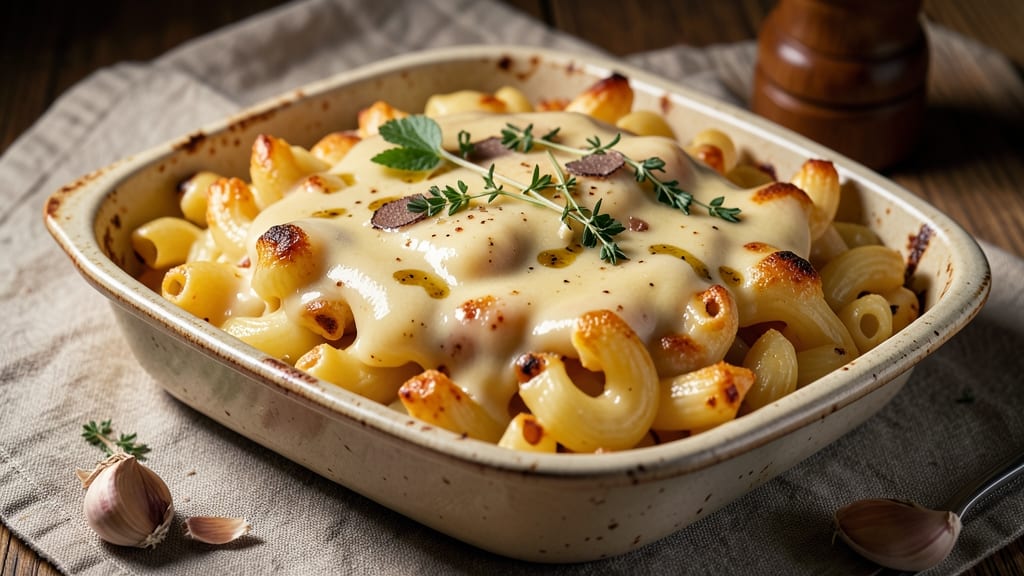
This baked macaroni and cheese recipe with alfredo sauce combines two all-time favorites into one decadent, triple-layered dish that’s creamy, crispy, and impossible to resist. The secret lies in balancing a rich alfredo base with a classic cheddar-cheese sauce, topped with golden breadcrumbs for the perfect texture contrast.
I developed this recipe after years of testing—it’s the kind of comfort food that transforms a simple weeknight into a restaurant-worthy meal.
The magic happens in the layers: a velvety alfredo sauce forms the foundation, while a gooey cheddar-cheese mixture sits atop tender macaroni. Baking at 350°F for 20–25 minutes ensures the top gets crispy and golden, while the center stays creamy and bubbly.
The result? A dish so rich and satisfying, it’ll have everyone asking for seconds—and thirds. No fancy techniques required, just a few simple steps and high-quality ingredients.
What makes this recipe stand out is how it elevates ordinary mac and cheese into something extraordinary. The alfredo sauce adds a luxurious creaminess that pairs perfectly with the sharp, melty cheddar, while the breadcrumb topping adds a satisfying crunch.
It’s the kind of dish that feels indulgent but comes together in under 30 minutes—ideal for busy weeknights or special occasions when you want to impress without stress.
Serve it with a crisp green salad or garlic bread to soak up every last bite of that rich, cheesy goodness. The leftovers? Even better the next day, if you can resist eating the whole pan straight from the oven. Let’s get started—your taste buds will thank you.
Ingredients for baked macaroni and cheese recipe with alfredo sauce
Six ingredients make this triple-layered masterpiece—creamy alfredo, melty cheddar, crispy crunch.
| Ingredient | Amount | Notes |
|---|---|---|
| Elbow Macaroni 🍝 | 1 ½ lbs | Medium or small elbow shape |
| Sharp Cheddar Cheese 🧀 | 2 cups | Aged 2+ years, freshly grated |
| Heavy Cream 🥛 | 1 ½ cups | Full-fat, cold from fridge |
| Unsalted Butter 🧈 | ¾ cup | Cold, cubed for alfredo |
| All-Purpose Flour 🌾 | ½ cup | For alfredo roux |
| Garlic Cloves 🧄 | 4 cloves | Minced, fresh preferred |
| Whole Milk 🥛 | ½ cup | Warmed for alfredo |
| Parmesan Cheese 🧀 | ½ cup | Freshly grated, nutty |
| Panko Breadcrumbs 🍞 | ½ cup | For crispy topping |
| Dried Parsley 🌿 | 1 tbsp | Finely chopped, for garnish |
| Diamond Crystal Kosher Salt 🧂 | 1 ½ tsp | For seasoning, adjust to taste |
| Ground Black Pepper 🌶️ | ½ tsp | Freshly cracked |
| Nutritional Yeast 🍄 | 2 tbsp | For cheesy depth (optional) |
The cheddar is non-negotiable here—sharp, aged varieties melt best. Whole Foods or specialty cheese shops carry the good stuff, but any 2+ year aged cheddar from the grocery store deli works. Keep the butter and heavy cream cold until the last minute—room temperature fat makes the alfredo separate. For the macaroni, medium elbow shape holds sauce better than small. Pro tip: Toast the breadcrumbs in butter for 2 minutes before topping—this adds extra crunch that lasts through baking.
No sharp cheddar? Monterey Jack at half sharpness works in a pinch, but the flavor won't be as rich. Substituting heavy cream for whole milk? Add 2 tbsp melted butter per cup to compensate. The alfredo roux needs patience—cook it 5-7 minutes until nutty brown, not white. For extra umami, swap 1 tbsp of the flour with nutritional yeast. And if you're watching calories, reduce the butter by 1 tbsp—the dish still tastes amazing.
This reheats beautifully—just cover with foil and bake at 350°F for 10 minutes. Leftovers keep 4-5 days in the fridge, but honestly? They disappear faster. For make-ahead magic, assemble the dish (without baking) up to 1 day ahead. The breadcrumbs stay crispy if you bake straight from the fridge—just add 2-3 extra minutes to the baking time. Portion into individual ramekins for single servings that feel fancy.
Why You'll Love This Recipe
- Here’s what sold me: it’s my go-to when I need to feed a crowd without breaking the bank. A pound of elbow mac, a block of cheddar, and a few simple pantry staples stretch to six servings. Plus, the alfredo sauce uses cheap flour and butter—no fancy ingredients, just pure, satisfying flavor. My college fund couldn’t compete.
- One-Pot Magic: I swear by this recipe because it’s actually one-pan—no boiling pasta separately, no messy sauces. Just toss the elbows in, pour the creamy alfredo-cheddar mix over them, and bake. The pasta absorbs that rich, velvety sauce while getting tender, and honestly? I’ve never scrubbed a pot harder than this one.
- Cheddar-Cream Dream: That sharp cheddar melts into a stretchy, gooey blanket, while the alfredo sauce—made with heavy cream and butter—adds a luxurious silkiness. It’s the kind of dish that makes you slow down, take a bite, and think, “Wait, is this too good for a weeknight?” (Spoiler: No.)
- Leftover Reinvention: Between us, this mac and cheese is even better the next day. The flavors meld into something deeper, and it reheats like a dream—just a quick zap in the microwave or a few minutes in the oven. I’ve turned cold leftovers into lunchbox meals, potluck sides, and even a breakfast hash with crispy bacon.
Step-by-step instructions for triple-layered mac and cheese
This method delivers restaurant-quality mac and cheese with a creamy alfredo base, melty cheddar layer, and crispy breadcrumb topping—all in one pan.
Cook the Elbow Macaroni to Perfect Al Dente
Bring a large pot of water to a rolling boil and add 1.5 lbs elbow macaroni. Season generously with 1.5 tsp Diamond Crystal kosher salt—the water should taste like the sea. Cook until 1 minute before the package directions specify for al dente (you want it slightly firm). This ensures it doesn't turn mushy when baked.
Drain the pasta in a colander, reserving 1 cup of pasta water—this starchy liquid is essential for emulsifying the alfredo sauce later. Immediately transfer the drained pasta to a large mixing bowl and toss with 2 tbsp nutritional yeast to add depth of flavor. The pasta should be hot but not steaming when you add it to the sauce later.
Create the Creamy Alfredo Base
In a separate large skillet, melt 0.75 cup unsalted butter over medium heat until foaming. Whisk in 0.5 cup all-purpose flour and cook for 2-3 minutes, stirring constantly, until the mixture forms a smooth, pale roux. This is your sauce foundation—don't let it brown or it'll taste bitter.
Gradually whisk in 1.5 cups heavy cream and 0.5 cup warmed whole milk, allowing each addition to fully incorporate before adding more. Stir in 4 cloves minced garlic and 0.5 cup freshly grated Parmesan cheese, cooking for another 3-4 minutes until the sauce thickens enough to coat the back of a spoon. Remove from heat and set aside—this sauce will continue thickening as it cools.
Assemble the Triple-Layered Cheese Mixture
In a separate bowl, combine 2 cups freshly grated sharp cheddar cheese, 0.5 tsp ground black pepper, and 0.5 cup reserved pasta water. Mix until smooth—this creates a velvety cheese sauce that won't be grainy. Pour this mixture over the hot pasta in the mixing bowl and toss vigorously until every strand is coated.
Add the alfredo sauce to the pasta and mix thoroughly until fully combined. The sauce should coat the pasta completely, creating a glossy, creamy texture. If it's too thick, add 1-2 tablespoons of reserved pasta water to loosen it. Transfer the entire mixture to a greased 9x13-inch baking dish and spread it evenly into a single layer.
Create the Crispy Topping Layer
In a small bowl, mix together 0.5 cup panko breadcrumbs, 1 tbsp finely chopped dried parsley, and 0.5 tsp ground black pepper. Sprinkle this evenly over the top of the mac and cheese, pressing down gently to help it adhere. The breadcrumbs will create a golden, crispy crust while keeping the cheese underneath creamy.
Bake uncovered at 375°F for 25-30 minutes, until the top is deep golden brown and the edges are bubbling. The cheese should be fully melted with a slight pull-back from the sides of the dish. If the top browns too quickly, tent loosely with foil for the last 5-10 minutes of baking.
Rest and Serve with Perfect Texture
Remove from the oven and let the mac and cheese rest for 5-10 minutes before serving. This resting period allows the layers to set slightly, preventing a runny mess when cutting. The breadcrumb topping should be crispy, the alfredo sauce silky, and the cheddar layer gooey in the center.
Cut into squares and serve immediately, garnished with additional chopped parsley if desired. Each bite delivers the perfect balance of creamy alfredo, melty cheddar, and crispy breadcrumb topping—all in one delicious, triple-layered experience.
Pro Tips For Making Baked Macaroni And Cheese Recipe With Alfredo Sauce
- Cook Pasta Al Dente: I learned this the hard way—overcooked elbow macaroni turns into mush when baked. Pull it out when it’s still slightly firm (about 1 minute before package time) because it’ll finish cooking in the oven. Trust me, nobody wants a watery, sad mac and cheese.
- Grate Cheese Fresh: Pre-shredded cheddar has anti-caking agents that make it less melty. Grab a box of sharp cheddar and grate it yourself—it’ll stretch smoother and brown better in the oven. (Yes, even if you’re impatient like me.)
- Whisk the Roux Hard: The alfredo sauce is only as good as the roux. Cook the butter and flour on medium heat until it’s a deep golden brown—about 3-4 minutes—before adding the cream. Skimp here, and your sauce will taste raw.
- Bake Covered First: Start with the foil on to melt the cheese evenly, then uncover for the last 5-10 minutes to get that golden crust. I used to bake it uncovered the whole time, and the top always stayed bland. (Your future self will thank you.)
Essential equipment for perfect results
Essential Baking Dish
You’ll need a 9x13-inch baking dish with a 2-inch depth—this size gives you enough surface area for even baking while preventing overflow. I recommend Ceramic or glass dishes (like Pyrex) because they distribute heat evenly and prevent hot spots.
Avoid metal dishes—they can react with acidic cheeses and may not crisp the breadcrumbs as effectively. If you’re short on dishware, a 9x9-inch square pan works, but expect slightly thicker slices. 🔥
Mixing Bowls
Grab a large mixing bowl (at least 5-quart capacity) for combining the pasta and sauce—this prevents spills when tossing. A stainless steel or glass bowl works best because they’re non-reactive and easy to clean.
For the cheese sauce, use a smaller bowl (about 2-quart) to mix the cheddar and pasta water smoothly. I keep a set of nested bowls (like OXO Good Grips) for this exact purpose—they stack neatly and save space. ⚡
Measuring Tools
Precision matters here, especially with cheese and butter. Use a digital kitchen scale (like OXO Good Grips) for accurate measurements—1 cup grated cheddar can vary by 2-3 ounces depending on how you grate it.
For liquids, a liquid measuring cup (like Pyrex) ensures you get the right amount of heavy cream and milk. Pro tip: Chill your measuring cups in the freezer for 10 minutes before measuring cold ingredients like butter—they’ll give you more accurate volume readings. 💡
Cheese Grater
A fine-grate box grater (like Microplane) is non-negotiable for this recipe—it ensures your cheddar melts smoothly without clumps. Pre-shredded cheese contains anti-caking agents that make it grainy when baked. If you’re grating by hand, freeze the cheese for 15 minutes first—it’s easier to grate and less messy.
For Parmesan, a dedicated cheese plane (like Barazoni) gives you the perfect fine shavings for the alfredo sauce. ✨
Breadcrumbs Tool
While panko breadcrumbs are pre-made, toasting them in butter adds extra flavor. Use a small skillet (like 10-inch cast iron) for even browning. For homemade breadcrumbs, pulse 1 slice crusty bread (like sourdough) in a food processor until fine.
Store extra breadcrumbs in an airtight container—they stay fresh for up to 2 weeks in the pantry. A fine-mesh sieve helps sift out any large pieces before topping the dish. 🍞
Optional Pro Tools
An immersion blender (like Ninja) saves time when emulsifying the cheese sauce—just blend the cheddar and pasta water directly in the bowl. For extra crispy breadcrumbs, a handheld torch (like Weber) adds a restaurant-style finish in seconds.
If you love leftovers, ramekins (like Le Creuset) turn this into an impressive single-serving dish. These tools aren’t essential, but they elevate the experience. 💫
Nutrition facts
Frequently asked questions
Can I make this recipe without alfredo sauce?
The alfredo sauce is what gives this dish its luxurious creaminess, but you can substitute it with a classic cheddar-bechamel sauce. Use 1 cup heavy cream, 1 cup whole milk, and 1/2 cup butter to make a roux, then add 1 cup grated cheddar and 1/2 cup Parmesan for a similar rich texture. The dish will still be delicious but with a slightly different flavor profile.
Why does my mac and cheese get watery when baked?
Watery mac and cheese usually happens when the pasta is overcooked or too much liquid is added. Always cook pasta to 1 minute before al dente—it'll finish cooking in the oven. Also, avoid overmixing the cheese sauce; stir just until smooth to prevent breaking the sauce's emulsion. If it's still too wet, bake uncovered for 5-10 extra minutes to evaporate excess moisture.
How do I make this dish ahead of time?
Assemble the dish completely (including the breadcrumb topping) up to 24 hours ahead and refrigerate uncovered. When ready to bake, let it sit at room temperature for 30 minutes before baking at 375°F for 30-35 minutes—the extra time compensates for the cold start. For make-ahead leftovers, reheat covered with foil at 350°F for 10-15 minutes to restore crispiness.
Can I use a different type of pasta?
Elbow macaroni is ideal because its shape holds sauce well, but you can use penne, cavatappi, or fusilli instead. Avoid long pasta like spaghetti or linguine—they don't distribute sauce evenly. For a fun twist, try shells or gemelli, but reduce the baking time to 20-25 minutes since they cook faster. Always cook pasta slightly underdone for best results.
What's the best way to get crispy breadcrumbs?
Toast your panko in a dry skillet over medium heat for 2-3 minutes until golden before adding butter—this removes moisture and creates extra crunch. For maximum crispiness, mix the breadcrumbs with 1 tbsp melted butter before sprinkling on top. If using homemade breadcrumbs, bake them separately at 350°F for 5 minutes before adding to the dish.