
Appetizers
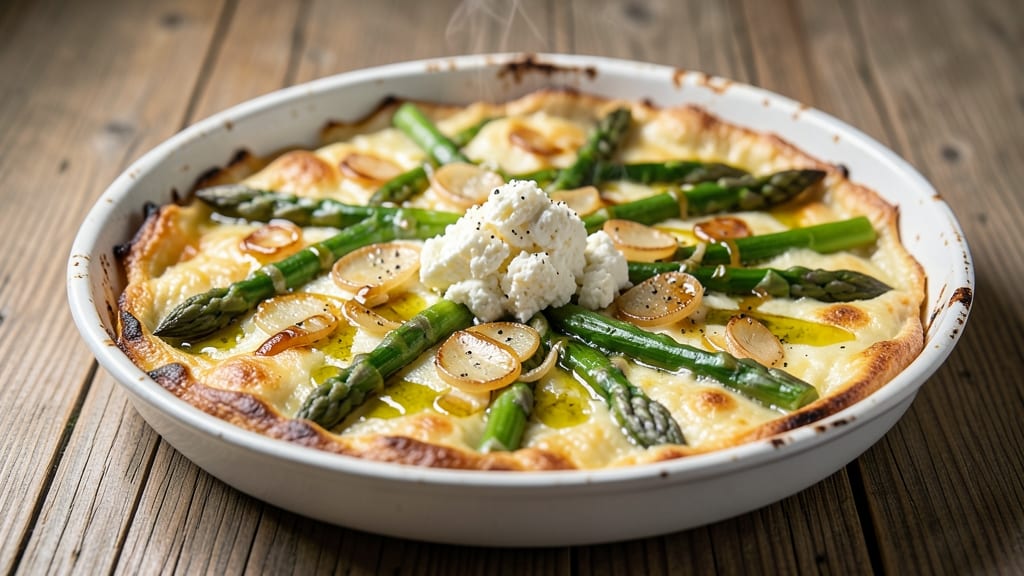
This asparagus and goat cheese frittata recipe delivers the perfect balance of textures—crispy golden edges, creamy goat cheese pockets, and tender asparagus—all in one elegant, one-pan dish.
The secret lies in blanching the asparagus first to preserve its vibrant color and snap, while the eggs transform into a fluffy yet sturdy base that holds up beautifully when sliced.
What makes this vegetarian frittata truly special is how the tangy goat cheese and earthy asparagus complement each other, creating a dish that feels both comforting and sophisticated.
The beauty of this recipe is its simplicity: no fancy techniques required, just a few essential ingredients and a method that ensures creamy centers without sacrificing that coveted crispy top.
You’ll start by sautéing the asparagus until tender-crisp, then layering in the goat cheese before pouring in the whisked egg mixture. The stovetop-to-oven finish guarantees a perfectly set yet tender frittata every time, with minimal effort.
It’s the kind of dish that transforms a simple breakfast into a showstopping meal, whether served for brunch or a light dinner.
What you’ll end up with is a frittata that’s crispy at the edges, creamy in the center, and packed with bright, fresh asparagus spears and melty goat cheese.
The contrast of textures—crunchy asparagus, soft eggs, and velvety cheese—makes each bite satisfying, while the golden-brown crust adds an extra layer of depth. This is the kind of recipe that feels indulgent yet effortless, perfect for feeding a crowd or enjoying a quiet meal with good company.
Serve it warm with a sprinkle of fresh herbs, a drizzle of balsamic glaze, or a simple arugula salad to balance the richness. The frittata holds together beautifully when sliced, making it easy to portion and serve—ideal for meal prep or a last-minute gathering.
Here’s how to make it happen, step by step.
Ingredients for asparagus and goat cheese frittata
Fresh asparagus, creamy goat cheese, and fluffy eggs create the perfect balance of textures in this vegetarian masterpiece.
| Ingredient | Amount | Notes |
|---|---|---|
| Large Eggs 🥚 | 8 whole | Room temperature for even cooking |
| Fresh Asparagus 🌱 | 1 lb | Medium spears, trimmed ends |
| Goat Cheese 🧀 | 8 oz | Soft, creamy variety preferred |
| Extra-Virgin Olive Oil 🫒 | ¼ cup | High-quality, fruity variety |
| Unsalted Butter 🧈 | 2 tbsp | For crispy crust development |
| Shallots 🧅 | 2 whole | Finely minced for aromatic base |
| Diamond Crystal Kosher Salt 🧂 | ½ tsp | For seasoning balance |
| Freshly Ground Black Pepper 🌶️ | ¼ tsp | Freshly cracked for bright flavor |
| Fresh Chives 🌿 | 2 tbsp | Chopped for garnish and freshness |
| Heavy Cream 🥛 | 2 tbsp | Optional for extra creaminess |
| Nutritional Yeast 🍄 | 1 tbsp | For umami depth (optional) |
The quality of your asparagus and goat cheese makes all the difference. Local farmers markets often carry the freshest asparagus spears—look for vibrant green stalks with tight tips, a sign of crispness. For goat cheese, Whole Foods' La Tourangelle brand is my go-to for its velvety texture and tangy flavor, but any soft, creamy variety will work. The eggs should be large and fresh; Peters Eggs or organic brands are ideal. Prep the asparagus by snapping off the woody ends—no need to peel. The shallots add depth, so mince them finely for even distribution in the frittata. If you're using nutritional yeast, Bob's Red Mill is a reliable brand that adds a cheesy, umami note without dairy.
No goat cheese? Creamy ricotta or mascarpone works in a pinch, though the tang will differ. Swap asparagus for zucchini or bell peppers if needed, but blanching first preserves texture. The heavy cream is optional but enhances creaminess—half-and-half works too. For extra crispiness, brush the top with melted butter before broiling. If you're short on chives, fresh parsley or dill add a bright contrast. The olive oil should be extra-virgin—cheap oil can overpower the delicate flavors. And trust me, room-temperature eggs whisk up smoother and incorporate better into the mixture.
Store any leftovers in an airtight container for up to 3 days, though this frittata reheats beautifully—just warm in a skillet for crispy edges. The goat cheese keeps best in its original packaging for 2 weeks in the fridge, while fresh asparagus lasts 5-7 days wrapped in a damp towel. Prep the asparagus and cheese the night before to streamline morning assembly. For meal prep, slice the frittata into wedges and freeze between parchment paper for up to 2 months. Reheat directly from frozen for a crispy texture, or thaw overnight for a gentler warm-up.
Why You'll Love This Recipe
- Here’s what sold me: I can make this for breakfast, pack it for lunch, or serve it at a brunch with friends. The leftovers reheat beautifully (just a quick zap in the microwave), and it’s the kind of dish that feels fancy but won’t make you stress. My coworkers actually ask for seconds when I bring it to the office.
- One-Pan Magic: I swear by this recipe when I’m too tired to wash dishes. Butter the pan, crack in the eggs, toss in the asparagus spears (no fancy trimming needed), and let the goat cheese melt into that golden crust. It’s the kind of meal where the cleanup is basically over before you’ve even sat down.
- Creamy Crispy Contrast: Between us, that first bite of the crispy edges with the soft, tangy goat cheese oozing into the fluffy egg center? It’s the kind of balance that makes you pause mid-fork. The asparagus adds a bright, slightly bitter pop that cuts through the richness—like a fresh spring breeze in your mouth.
- Lunchbox Hero: Here’s what sold me: I can make this for breakfast, pack it for lunch, or serve it at a brunch with friends. The leftovers reheat beautifully (just a quick zap in the microwave), and it’s the kind of dish that feels fancy but won’t make you stress. My coworkers actually ask for seconds when I bring it to the office.
Step-by-step instructions for asparagus and goat cheese frittata
Master the perfect balance of crispy edges and creamy centers with this precise method.
Prepare the Asparagus and Aromatics
Preheat your oven to 375°F and position a rack in the middle position. Trim the tough ends from the 1 lb fresh asparagus, then cut each spear into 1-inch pieces. Spread them on a baking sheet and toss with 1 tablespoon of the extra-virgin olive oil, ½ teaspoon of the kosher salt, and ¼ teaspoon of the black pepper. Roast for 8-10 minutes until tender but still vibrant green—they should hold their shape when pierced with a fork.
While the asparagus roasts, finely mince the 2 whole shallots in a small bowl. You want them almost paste-like at this stage to prevent them from burning later. Keep them at room temperature until ready to use—they'll release their sweetness more effectively when not cold.
Create the Egg Mixture and Pre-Cook the Base
In a large bowl, whisk together the 8 whole large eggs until the yolks and whites are fully combined with no streaks remaining. Add the 2 tablespoons heavy cream and 1 tablespoon nutritional yeast, whisking gently to incorporate. The nutritional yeast adds a subtle umami depth that complements the goat cheese beautifully. Season with the remaining ½ teaspoon kosher salt and ¼ teaspoon black pepper.
Heat a 10-inch oven-safe skillet over medium heat and add the 2 tablespoons unsalted butter and remaining 1 tablespoon extra-virgin olive oil. Once the butter foams, add the minced shallots and cook for 2-3 minutes until softened but not browned. This aromatic base will form the flavor foundation for your frittata.
Layer and Cook the Frittata
Pour the egg mixture evenly into the skillet, tilting to distribute it completely. Let it cook undisturbed for 3-4 minutes until the edges begin to set and the top shows slight puffing. This initial cook creates the crispy crust we're after. Gently sprinkle half of the 8 oz goat cheese over the eggs, then add the roasted asparagus pieces in an even layer.
Return the skillet to the stovetop and cook for another 2-3 minutes until the edges are golden and the bottom is lightly browned. This is where the magic happens—the residual heat from the pan helps develop that perfect crispy crust while keeping the centers tender. Here's the thing—don't press down on the frittata with a spatula. We want that crispy texture to form naturally.
Finish in the Oven for Perfect Texture
Transfer the skillet to the preheated oven and bake for 12-15 minutes until the center is just set but still slightly jiggly when gently shaken. The top should be golden brown with crispy edges that contrast beautifully with the creamy interior. If you're unsure about doneness, insert a toothpick—it should come out clean but with slightly moist crumbs.
Remove from the oven and let rest for 5 minutes before serving. This resting period allows the goat cheese to fully melt and the frittata to set slightly, making it easier to slice. Sprinkle the remaining goat cheese on top and garnish with the 2 tablespoons chopped fresh chives. The chives add a bright, fresh contrast to the rich goat cheese and asparagus.
Serve with Confidence
Use a large spatula to slide the frittata onto serving plates. The crispy edges should hold their shape while the creamy centers remain tender. Each bite should deliver a perfect balance of textures—crispy crust, creamy egg, and tender asparagus spears with melting goat cheese. For an extra touch, serve with a simple arugula salad dressed with lemon vinaigrette to cut through the richness.
Real talk: The secret to this frittata's success lies in the crispy edges. If you're worried about the top not browning enough, you can broil for 1-2 minutes at the very end, but watch it closely—broiling can dry out the top quickly. This method delivers that perfect restaurant-quality frittata you've been craving, with minimal effort and maximum flavor.
Pro Tips For Making Asparagus And Goat Cheese Frittata
- Prep Asparagus Roughly: Trim the tough ends, then snap the stalks by hand—no need for perfect uniformity. The thicker bottoms stay crisp, and the tops soften just right when cooked. (I used to slice them evenly, but this saves time and keeps texture balanced.)
- Salt the Eggs: Whisk the eggs with a pinch of salt before adding anything else. Goat cheese is salty, and the eggs absorb flavor better this way. (Yes, even if your butter is unsalted—trust me, it matters.)
- Start Hot, Finish Covered: Crank the heat to medium-high for the first 3 minutes to set the bottom, then lower to medium and cover with foil. This prevents a rubbery center while keeping the goat cheese melty, not stringy. (I learned this the hard way—overcooked frittatas are a crime.)
- Dot the Cheese: Scatter the goat cheese in small clumps, not a thin layer. It melts slower and creates pockets of creamy goodness instead of a sad, spread-out puddle. (And resist the urge to press it down—it’ll sink anyway.)
Best sauces and condiments for these flavors
Creamy Garlic Sauce
Elevate your frittata with a garlic-herb cream sauce that adds richness while balancing the tangy goat cheese. In a small saucepan, melt 2 tablespoons unsalted butter over medium-low heat, then add 2 minced garlic cloves and cook for 30 seconds until fragrant.
Pour in ½ cup heavy cream and 2 tablespoons crème fraîche, simmering for 2 minutes until slightly thickened. Stir in 1 teaspoon fresh thyme leaves and ¼ teaspoon kosher salt. Drizzle this sauce over individual slices before serving—it melts into the warm frittata for a luxurious finish. 🌟
Balsamic Glaze Drizzle
A homemade balsamic glaze cuts through the richness with its sweet-tart brightness. Simmer ¼ cup balsamic vinegar in a small saucepan over medium heat until reduced by half (5-7 minutes). Finish with a pinch of flaky sea salt and let cool slightly.
Drizzle generously over the frittata just before serving—it pairs perfectly with the earthy asparagus and creamy cheese. For extra flair, add a sprinkle of toasted walnuts or pecans for crunch. ✨
Lemon-Herb Aioli
Brighten the dish with a zesty lemon-aioli that adds freshness and moisture. Blend ½ cup mayonnaise, 1 tablespoon lemon juice, 1 teaspoon Dijon mustard, 1 minced garlic clove, and 1 tablespoon chopped chives until smooth.
Season with ¼ teaspoon kosher salt and pinch of black pepper. Serve this aioli on the side for dipping or as a topping—it’s especially delicious with the crispy edges of the frittata. 💛
Spicy Harissa Yogurt Sauce
Add a North African twist with a spicy harissa yogurt sauce that contrasts beautifully with the creamy frittata. Mix ½ cup plain Greek yogurt, 1 teaspoon harissa paste, ½ teaspoon honey, and 1 tablespoon chopped fresh mint.
Thin with 1 teaspoon water if needed for drizzling. This sauce adds heat and tang, balancing the richness of the goat cheese. Garnish with a pinch of smoked paprika before serving for an extra layer of depth. 🌶️
Nutrition facts
Frequently asked questions
Why blanch asparagus before adding it to the frittata?
Blanching preserves the asparagus's vibrant green color and crisp-tender texture while preventing it from turning mushy. The quick 8-10 minute roast at 375°F ensures it stays bright and holds its shape perfectly when layered in the frittata.
Can I make this frittata ahead of time?
Yes! Assemble the frittata completely, then refrigerate it in an airtight container for up to 2 days. Reheat in a skillet over medium-low heat for 5-7 minutes to restore crispiness. For freezing, slice into wedges and freeze between parchment paper for up to 2 months. Thaw overnight before reheating.
How do I get the perfect crispy top without drying out the center?
The key is the two-stage cook: 3-4 minutes on the stovetop to set the edges, then 12-15 minutes in the oven at 375°F. Avoid pressing down on the frittata—this creates steam that keeps centers creamy while edges crisp. For extra browning, broil for 1-2 minutes at the very end, watching closely.
What can I substitute if I don't have goat cheese?
Use 8 oz ricotta or mascarpone for creaminess, or feta for tang. For a vegan option, try cashew cheese or extra nutritional yeast (1 tbsp) mixed with 2 tbsp lemon juice to mimic tanginess. Adjust seasoning—ricotta needs more salt, while feta may need extra herbs to balance.
Is this frittata suitable for meal prep?
Slice the cooled frittata into wedges and store in an airtight container for 3-4 days in the fridge. Reheat individual portions in a skillet for 2-3 minutes per side to restore crispiness. For grab-and-go meals, wrap wedges in foil and reheat in the microwave for 45 seconds, though texture will be softer.