
Appetizers
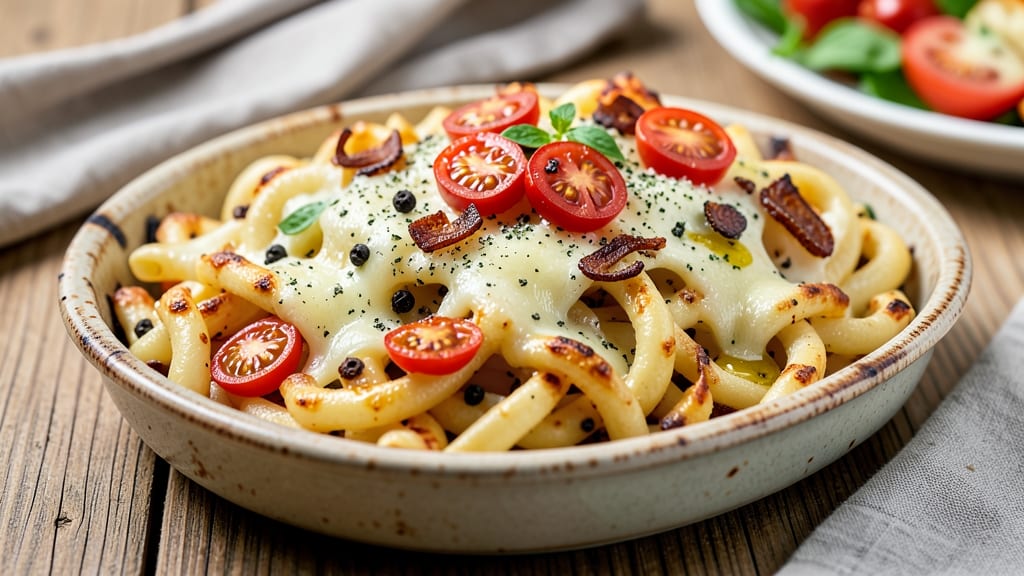
This baked cheese spaetzle recipe delivers the perfect balance of crispy golden edges and gooey, stretchy cheese centers that make every bite irresistible. 🔥 The secret lies in the traditional German technique of pressing fresh spaetzle dough through a board or grater, then layering it with melted Gruyère and Emmental before baking until bubbly and golden.
What sets this dish apart is how the cheese transforms from firm to molten during baking, creating that signature pull-apart texture.
What makes this recipe truly special is its simplicity combined with restaurant-quality results. You'll start with a basic egg-based dough that comes together in minutes, then transform it into crispy, cheesy bites with just a few key ingredients.
The high heat of the oven (around 375°F) ensures a perfect golden crust while keeping the interior tender and cheesy. This dish is naturally vegetarian and perfect for feeding a crowd or enjoying as a comforting weeknight meal.
By the time it emerges from the oven, you'll have a bubbling, golden spaetzle casserole with crispy edges and a stretchy, melty interior that's impossible to resist. The aroma alone will have everyone gathering around the table, and the first bite delivers that perfect contrast of textures.
Serve it with caramelized onions or a simple green salad to round out the meal.
This recipe is foolproof and delivers consistent results every time, making it ideal for both beginner and experienced cooks. The technique is straightforward, and the ingredients are simple—just flour, eggs, cheese, and a few basic seasonings.
Let's get started on creating this comforting, cheesy masterpiece that's sure to become a family favorite.
Ingredients for baked cheese spaetzle
Golden crust meets melty cheese—just 12 ingredients transform simple spaetzle into restaurant-quality comfort food.
| Ingredient | Amount | Notes |
|---|---|---|
| All-Purpose Flour 🌾 | 2 cups | Sifted for light texture |
| Large Eggs 🥚 | 4 whole | Room temperature preferred |
| Water 💧 | 1 ½ cups | Lukewarm for smooth dough |
| Salt 🧂 | 1 tsp | Fine sea salt preferred |
| Nutritional Yeast 🧀 | 2 tbsp | For cheesy flavor boost |
| Gruyère Cheese 🧀 | 2 cups | Freshly grated, aged 6 months |
| Emmental Cheese 🧀 | 1 ½ cups | Freshly grated, mild flavor |
| Unsalted Butter 🧈 | ½ cup | Cold, cubed for melting |
| Heavy Cream 🥛 | ½ cup | Full-fat for richness |
| Garlic Cloves 🧄 | 2 cloves | Minced for aroma |
| Fresh Parsley 🌿 | ¼ cup | Chopped, for garnish |
| Black Pepper 🌶️ | ½ tsp | Freshly cracked |
The cheeses are non-negotiable here. Gruyère brings that signature nutty depth, while Emmental keeps things mild and melty. Whole Foods or specialty cheese shops carry the best aged Gruyère—look for blocks with good marbling. Freshly grating saves money and prevents clumping. For the dough, King Arthur flour gives the best texture, but any all-purpose works. The nutritional yeast isn't just for vegans—it adds that umami punch that makes this taste like a cheesy spaetzle dream. I always double-check my cheese stash before starting—no one wants gummy spaetzle from old cheese!
No Gruyère? Comté or sharp cheddar works in a pinch, but the flavor won't be identical. Running short on butter? Olive oil or coconut oil keeps things vegan, though the texture will be slightly different. Fresh parsley wilting? Dried parsley at one-third the amount saves the day. The garlic can be pre-minced from a jar (trust me, it's fine), but if you're feeling fancy, roast the cloves first for deeper flavor. Want extra crispiness? Add 1 tbsp cornstarch to the flour mix—game changer for the crust. And if you're making this ahead, freeze the unbaked layers for up to 2 months!
This casserole reheats like a dream—just 10 minutes at 350°F covered with foil. Leftovers keep 4-5 days in the fridge, but honestly, it's even better the next day when everything melts together. For serving, I always use stoneware dishes—they distribute heat better and make the crust extra crispy. The cheese gets firm again when chilled, so reheat covered to bring back that gooey magic. And if you're feeding a crowd, double the recipe—this disappears faster than you can say 'spaetzle'!
Why You'll Love This Recipe
- Just Four Ingredients: I swear, that’s it—flour, eggs, water, and salt. No fancy dough rolling or shaping stress. You mix, press through a colander, and let the oven do the magic. (Yes, even when I’m half-asleep on a Sunday morning.)
- Umami Bomb: That nutritional yeast? It’s the secret weapon here—nutty, cheesy, and deeply satisfying. The baked edges get crispy while the inside stays tender, and honestly? It’s the kind of dish that makes you forget about takeout.
- Weeknight to Potluck: Make a big batch on Monday, reheat it all week, or bring it to a picnic. The spaetzle holds up surprisingly well, and it’s way more impressive than store-bought mac and cheese. (My roommates still think I’m a chef.)
- Budget Cheat Code: Eggs and flour stretch far, and nutritional yeast adds richness without breaking the bank. Leftovers? Even better reheated with a sprinkle of black pepper. I’ve fed a crowd for under $10—no joke.
Step-by-step instructions for baked cheese spaetzle
Here's how to make spaetzle with that perfect golden crust and melty cheese pull.
👨🍳 Step 1: Make the Cheesy Spaetzle Dough
In a large bowl, whisk together the 2 cups all-purpose flour and 1 tsp salt until combined. Create a well in the center and add the 4 whole large eggs, 1.5 cups lukewarm water, 2 tbsp nutritional yeast, and 0.5 tsp black pepper. Mix vigorously with a wooden spoon until you get a smooth, thick batter—it should coat the back of your spoon but still be pourable.
Here's the thing—this dough needs to be just right. If it's too thick, add 1-2 tbsp water at a time until it reaches the perfect consistency. Too thin? Stir in 1 tbsp flour. The goal is a batter that flows like heavy cream but holds its shape when dropped. I like to let it rest for 5 minutes while I prep the baking sheet—this helps the gluten relax and makes the spaetzle more tender.
🍳 Step 2: Prepare the Cheese Filling
While the dough rests, melt the 0.5 cup unsalted butter in a small saucepan over medium heat. Once melted, remove from heat and stir in the 2 cups grated Gruyère cheese and 1.5 cups grated Emmental cheese until completely melted and smooth. The mixture should be silky—if it's grainy, strain it through a fine-mesh sieve for the best texture.
In a separate small bowl, whisk together the 0.5 cup heavy cream and 2 minced garlic cloves. Gradually stir this into the cheese mixture until fully combined. The result should be a rich, velvety cheese sauce that's ready to be layered. I keep this warm in a double boiler while I finish the spaetzle—it's easier to spread when it's slightly warm but not hot.
🥘 Step 3: Assemble and Bake the Spaetzle
Preheat your oven to 375°F and grease a 9x13-inch baking dish with butter. Spread about half of the spaetzle dough evenly over the bottom of the dish using a spatula or the back of a spoon. Don't worry about making it perfect—just get it distributed as evenly as possible.
Spread the entire cheese mixture evenly over the spaetzle layer, then top with the remaining dough. Here's where it gets fun—use a fork to create peaks and valleys in the top layer. This creates those beautiful browned ridges when baked. Bake for 25-30 minutes until the top is golden brown and the edges are crispy.
🔥 Step 4: Finish with Garlic Cream and Parsley
While the spaetzle bakes, make the garlic cream sauce by combining the remaining 0.5 cup heavy cream (if any), 1 tbsp melted butter, and 1 minced garlic clove in a small saucepan. Warm over low heat until just heated through—don't let it boil. Stir in 2 tbsp grated Gruyère cheese until melted and smooth.
Once the spaetzle is golden and bubbly, remove from the oven and let it rest for 5 minutes. This resting time is crucial—it allows the cheese to set slightly and makes slicing easier. Cut into squares and serve immediately with the garlic cream sauce spooned over the top. Garnish with 0.25 cup chopped fresh parsley for a pop of color and freshness.
⏰ Step 5: Serve with Confidence
Here's the moment you've been waiting for—scoop up a piece of spaetzle and watch that golden crust give way to the creamy, melted cheese inside. The texture should be tender but still hold its shape, with a crispy exterior that contrasts perfectly with the soft interior. Serve with an extra drizzle of the garlic cream sauce and enjoy while warm—this dish is best fresh out of the oven.
Real talk: if you make this ahead, the spaetzle will get a bit soggy. But if you follow these steps, you'll have restaurant-quality spaetzle that's crispy, cheesy, and absolutely delicious every time.
Pro Tips For Making Baked Cheese Spaetzle
- STIR LIKE CRAZY: The dough for spaetzle needs to be aggressive—think of it like folding a stiff cake batter. After mixing flour, eggs, and water, grab a wooden spoon and stir for a full 30 seconds past when it looks combined. I learned this the hard way when my first batch turned out gummy because the gluten didn’t develop enough. High heat later on will thank you for the prep work.
- SALT THE WATER: Don’t just salt the dough—add 1½ teaspoons of salt directly to the boiling water when you press the spaetzle through the colander or spaetzle maker. The salt penetrates the strands while they cook, giving them a more consistent flavor. (Yes, even if your recipe says otherwise—trust me, it makes a real difference.)
- DON’T OVERPRESS THE DOUGH: When pressing spaetzle through a colander or board with holes, resist the urge to force it. The dough should slide through with gentle pressure—like snow falling through a sieve. Overworking it makes the strands dense and chewy. If it sticks, your dough’s too stiff; add 1 tablespoon water and mix again.
- BAKE AT 375°F: Skip the 400°F temptation—375°F is the sweet spot for even browning and a crispy top without burning the edges. I used to crank it higher, and my cheese spaetzle would darken too fast while staying doughy inside. A 20-minute bake time (covered with foil for the first 15) guarantees a golden, bubbly finish every time.
Common mistakes when making this recipe
Overmixing the Dough
I’ve made this mistake more times than I’d like to admit—overmixing the spaetzle dough turns it tough and chewy instead of tender and stretchy. The goal is a smooth, thick batter that coats the back of a spoon, not a stiff dough.
Mix just until the flour disappears and the batter flows like heavy cream. If you’re using a stand mixer, pulse on low for 10-15 seconds max. Overmixing develops too much gluten, and your spaetzle will end up rubbery instead of silky. 🥄
Skipping the Rest Time
This is a big one: letting the dough rest for 5 minutes before pressing or baking makes all the difference. The gluten needs time to relax, which prevents the spaetzle from turning out dense.
I know it’s tempting to jump straight to pressing, but trust me—skipping this step leads to a gummy, uneven texture. If you’re in a rush, at least let it sit for 2 minutes while you preheat the oven.
Uneven Cheese Distribution
Nothing ruins a casserole like pockets of dry spaetzle or gooey cheese pools. Spread the melted cheese mixture evenly over the bottom layer of dough—don’t just dump it in the center.
Use a spatula to smooth it out, and press down gently to ensure the cheese makes contact with the spaetzle. For the top layer, spread the remaining dough evenly and use a fork to create peaks. This ensures even browning and melty perfection in every bite. 🧀
Baking at the Wrong Temperature
The oven temperature is non-negotiable here. Baking at 375°F gives you that perfect golden crust and creamy interior. Too high (400°F+) burns the top before the cheese melts, while too low (350°F) leaves the center undercooked and the edges soggy.
Use an oven thermometer to confirm your oven’s accuracy—many run hot or cold. If your spaetzle isn’t browning enough, broil for 1-2 minutes at the end, but watch it like a hawk to avoid burning.
Not Resting After Baking
Cutting into the spaetzle immediately after baking is a recipe for disaster—it’ll fall apart and release all that hot cheese everywhere. Let it rest for 5-10 minutes to let the cheese set slightly and the structure firm up.
This also makes slicing cleaner and more controlled. Pro tip: If you’re serving a crowd, tent the dish loosely with foil during the resting time to keep it warm without steaming.
Using Old or Low-Quality Cheese
This is where flavor (and texture) make or break your spaetzle. Pre-shredded cheese contains anti-caking agents that prevent proper melting, leading to a grainy, dry result. Always grate your own Gruyère and Emmental using a microplane or box grater.
And for the love of spaetzle, use fresh cheese—old cheese loses its meltability and adds a bitter tang. If you’re short on time, freshly shredded sharp cheddar is a decent substitute, but it won’t have the same depth of flavor. 🧀✨
Nutrition facts
Frequently asked questions
Can I make this recipe without a spaetzle maker?
You can use a box grater with large holes or even a spaetzle press if you have one. For a quick hack, press the dough through a fork's tines into boiling water for 1-2 minutes, then drain and layer as directed. The texture will be slightly different but still delicious.
What's the best cheese substitute if I don't have Gruyère?
Try a mix of sharp cheddar and Parmesan (1:1 ratio) for a similar melt and flavor. For extra richness, add 1 tbsp cream cheese to the mixture. Avoid pre-shredded cheese—it contains anti-caking agents that prevent proper melting. Freshly grated always wins!
How do I prevent the spaetzle from getting soggy?
Bake it immediately after assembling—don't let the dough sit too long. For make-ahead prep, assemble the layers in a greased baking dish, cover with plastic wrap, and refrigerate for up to 24 hours. Bake straight from the fridge, adding 5-10 extra minutes to the cooking time. The cold start helps create a crispier crust.
Can I make this recipe gluten-free?
Yes! Replace the all-purpose flour with a 1:1 gluten-free flour blend (like Bob's Red Mill) and add 1 extra egg to bind the dough. The texture will be slightly denser, but still delicious. For extra crispiness, brush the top with melted butter before baking.
Why did my spaetzle turn out rubbery?
Overmixing the dough develops too much gluten, making it tough. Mix just until combined—about 10-15 seconds by hand or 20 seconds with a mixer. Also, ensure your oven is at 375°F (use an oven thermometer to check). Underbaking can also cause a gummy texture—aim for a golden brown top.