
Snacks
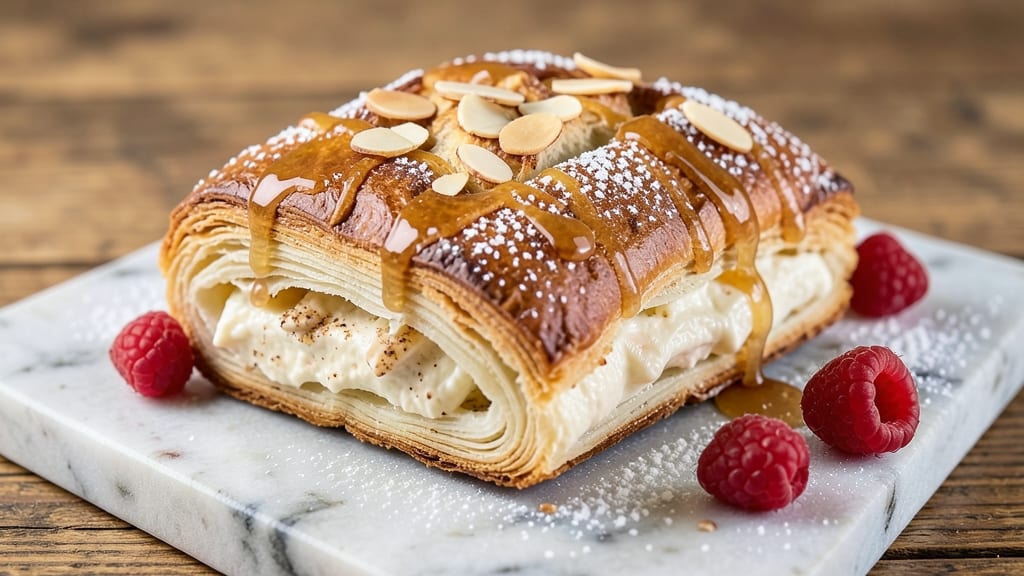
This almond cheese Danish recipe delivers flaky layers of buttery pastry wrapped around a rich almond-cream cheese filling that's both nutty and sweet. 💛 The secret lies in cold butter for tender dough and a precise folding technique that creates those signature puffy, golden layers.
I've perfected this recipe over years of baking, ensuring every bite offers that perfect balance of crispy, flaky crust and creamy almond filling.
The process begins with a simple yet foolproof dough that requires just a few ingredients and minimal handling. We'll create a rich filling using almond paste and cream cheese, then carefully layer and fold it into the dough before proofing and baking.
The result is a Danish with golden brown layers that practically melt in your mouth, paired with a sweet, nutty filling that's impossible to resist.
Baking at 375°F for 18-22 minutes ensures a perfectly risen Danish with a crisp exterior and tender interior. The filling stays creamy and doesn't leak, while the pastry develops that signature flakiness that makes this Danish worth the effort.
Once out of the oven, a simple glaze adds that final touch of sweetness and shine.
This recipe makes 8 servings, perfect for sharing with family or friends. While traditional Danish recipes can be intimidating, this version breaks down the process into manageable steps, ensuring restaurant-quality results every time.
Whether you're baking for a special occasion or simply treating yourself, this almond cheese Danish will impress.
Ingredients for almond cheese danish
Buttery dough meets rich almond filling—just eight ingredients for restaurant-quality Danish layers.
| Ingredient | Amount | Notes |
|---|---|---|
| All-Purpose Flour 🌾 | 4 cups | Sifted for light texture |
| Unsalted Butter 🧈 | 1 cup | Cold, cubed for flakiness |
| Granulated Sugar 🍚 | ¼ cup | For dough sweetness |
| Instant Yeast 🍄 | 2 ¼ tsp | Active dry works too |
| Large Eggs 🥚 | 1 whole | Room temperature preferred |
| Whole Milk 🥛 | ¼ cup | Warmed to 110°F |
| Salt 🧂 | ½ tsp | Kosher or sea salt |
| Almond Paste 🌰 | ¾ cup | High-quality, smooth texture |
| Cream Cheese 🧀 | 8 oz | Room temperature, full-fat |
| Powdered Sugar 🍚 | ¼ cup | For filling sweetness |
| Vanilla Extract 🌸 | 1 tsp | Pure vanilla preferred |
| Glaze Powdered Sugar 🍚 | ½ cup | For final coating |
| Heavy Cream 🥛 | 2 tbsp | For glaze consistency |
| Almond Slices 🌰 | ¼ cup | For garnish (optional) |
The butter is non-negotiable here. European-style butter like Plugrá or Land O'Lakes has higher fat content, which gives you those signature flaky layers. Buy it in 1-pound blocks from stores like Whole Foods or Costco—it stays fresher longer. Keep it cold until you're ready to cut it into cubes, and don't skip the chilling between folds. The almond paste should be smooth and free of graininess—Nutella works in a pinch, but brands like BelGioioso are worth the investment for that authentic almond flavor. If you can't find almond slices, toasted slivered almonds work just as well.
No almond paste? Blend toasted almonds with powdered sugar for a homemade version—just pulse until finely ground. Running short on cream cheese? Substitute with an equal amount of softened butter, though the filling will be slightly less rich. The vanilla extract can be swapped for 1 tsp vanilla sugar if you're out, but pure extract gives that authentic depth. For the dough, if you don't have instant yeast, use active dry yeast and let it proof longer. And if you're worried about the filling leaking, chill the filled danishes for 30 minutes before baking—this helps everything set properly.
Store the dough in the fridge for up to 24 hours if you need to prep ahead. The filled danishes can be kept in the fridge for 12 hours before baking, but don't let them sit too long or the filling may weep. Once baked, these keep well at room temperature for 2 days or in the fridge for 5 days. For longer storage, freeze the unbaked filled danishes for up to 1 month. To reheat, warm in a 300°F oven for 10 minutes—they'll taste fresh out of the oven every time. The glaze sets quickly, so work fast when drizzling it on top.
Why You'll Love This Recipe
- You’re using pantry staples: flour, butter, sugar, eggs. No specialty cheeses or pricey extracts here. For under $10, you get a batch that feeds six—leftovers? Toast them for extra crunch.
- No Yeast Nightmare: I’ve made enough stiff doughs to know this one’s different—the instant yeast works in minutes, not hours. Just mix, let it rise while you brew coffee, and boom: flaky layers without the wait.
- Creamy Crunch Magic: That almond cheese filling? It’s ridiculously good—smooth, nutty, and just sweet enough to balance the buttery dough. (Yes, even my picky husband finishes his slice.)
- Breakfast or Snack Star: Serve it warm with coffee for a weekend treat, or pack slices for lunch—those buttery flakes stay crisp even cold. Honestly, I’ve eaten them straight from the freezer. No judgment.
Step-by-step instructions for almond cheese Danish
Master the art of flaky layers with this precise technique for golden, buttery pastries.
👨🍳 Step 1: Prepare the Dough for Maximum Flakiness
In a large bowl, whisk together the 4 cups all-purpose flour, 0.25 cup granulated sugar, 2.25 tsp instant yeast, and 0.5 tsp salt. Make a well in the center and add the 1 whole large egg and 0.25 cup warmed whole milk. Mix gently until just combined—you want a shaggy dough, not a smooth one.
Place the dough on a lightly floured surface and knead briefly for 30 seconds until it comes together. This isn't about developing gluten—just forming a cohesive mass. Wrap tightly in plastic wrap and refrigerate for 1 hour. Cold dough prevents gluten development and creates those signature flaky layers later.
🍳 Step 2: Create the Almond Filling
In a medium bowl, combine the 8 oz cream cheese (at room temperature), 0.75 cup almond paste, 0.25 cup powdered sugar, and 1 tsp vanilla extract. Mix with a spatula until smooth and fully incorporated. The mixture should be thick but spreadable—almost like a firm dough.
Roll this mixture into a 12-inch log about 2 inches thick. Wrap tightly in plastic and refrigerate for 30 minutes while you prepare the dough for rolling. This chilling prevents the filling from melting when it comes in contact with the warm dough later.
🥘 Step 3: Roll and Assemble the Danish
On a lightly floured surface, roll the chilled dough into a 12x16-inch rectangle about 1/8-inch thick. Spread the almond filling log lengthwise down the center of the rectangle, leaving a 1-inch border on all sides. This precise placement ensures even distribution when you fold.
Fold the 1-inch border over the filling, then fold the dough in thirds like a letter, sealing the edges tightly. Roll the log gently but firmly to create a smooth cylinder. Trim the ends if needed and place on a parchment-lined baking sheet. Cover and refrigerate for 30 minutes to firm up before baking.
🔥 Step 4: Bake to Golden Perfection
Preheat your oven to 350°F. Cut the chilled danish log into 8 equal pieces (about 2 inches each). Place them on the baking sheet, 2 inches apart, and bake for 25-30 minutes until golden brown and internal temperature reaches 180°F. The edges should be crisp while the center remains tender.
I like to tent the danishes loosely with foil after 15 minutes to prevent over-browning. Watch carefully—they go from perfect to burnt quickly. The aroma should be rich with toasted almond notes when they're ready.
🥄 Step 5: Glaze and Garnish
While still warm, whisk together the 0.5 cup glaze powdered sugar and 2 tbsp heavy cream until smooth. Drizzle generously over the baked danishes. The glaze should coat the tops completely but remain slightly glossy—not sticky.
Sprinkle with the 0.25 cup almond slices immediately after glazing while the glaze is still wet. This creates that beautiful crunchy contrast against the soft pastry. Let cool for 10 minutes before serving to allow the glaze to set slightly while maintaining that warm, gooey center.
Pro Tips For Making Almond Cheese Danish
- Chill the Dough Twice: The first rise? Don’t skip it—let the dough double in a warm spot, then refrigerate for 12–24 hours. Sounds slow, but this develops flavor and prevents dense, gummy danishes. (Yes, even if you’re impatient like me.)
- Use Cold Butter for Layers: Cut that butter into tiny cubes and freeze them for 10 minutes before mixing into the dough. Warm butter spreads too fast, and your almond filling will end up soggy instead of flaky. Trust the process—your future self will thank you.
- Weigh the Flour, Don’t Scoop: Scooping flour from the bag packs it down, and you’ll end up with a dough that’s too dense. Use a kitchen scale for precision—aim for 350 grams of flour, sifted. This keeps the texture light and airy, especially for that almond cheese filling.
- Brush with Egg Wash Early: After shaping but before the final proof, brush the tops with a thin egg wash (1 egg + 1 tbsp water). This seals the surface, prevents cracking, and gives that golden sheen without waiting for the last possible minute. (Proofing too long? This step saves you.)
Regional styles of this recipe
Scandinavian Cardamom Twist
In Sweden and Denmark, cardamom is often added to Danish pastries for a warm, aromatic depth. Replace ½ tsp vanilla extract in the filling with 1 tsp ground cardamom and add 1 tbsp almond extract for a Scandinavian-inspired flavor.
Use Lindblad's cardamom pods for the most authentic taste. These versions are traditionally served with lingonberry jam on the side. 🌟
French Almond Cream
French bakeries often use a lighter almond cream filling by blending ½ cup almond flour with ¼ cup powdered sugar and 2 tbsp heavy cream into the filling mixture. This creates a delicate, airy texture.
For extra flair, brush the baked danishes with a simple syrup (equal parts sugar and water) before glazing. I've found Duke's almond flour gives the best texture. 🥖
German Marzipan Version
German bakeries frequently use marzipan instead of almond paste, creating a richer, more luxurious Danish. Replace the almond paste with ½ cup store-bought marzipan (like Joy of Cooking brand) mixed with ¼ cup softened butter.
Roll the marzipan mixture into the log and follow the same folding technique. These versions are often dusted with powdered sugar instead of glazed. 🌰
American Apple Cider Glaze
For a uniquely American touch, replace the powdered sugar glaze with a cider reduction. Simmer ½ cup apple cider vinegar with ¼ cup granulated sugar until reduced by half, then strain and drizzle over warm danishes.
Top with candied apple slices for a fall-inspired variation. I recommend Mott's cider for the best flavor balance. 🍎
Italian Lemon Zest Twist
Italian bakeries often incorporate bright citrus flavors into sweet pastries. Add 1 tbsp lemon zest to the almond filling and replace ½ tsp vanilla extract with ½ tsp lemon extract.
Garnish with thin lemon slices instead of almond slices. This version pairs beautifully with a mascarpone cheese drizzle on the side. 🍋
Dutch Windmill Danish
The Dutch version features a distinctive windmill pattern created by cutting the dough into a circle and making precise cuts before folding. After assembling the log, make 8 equal cuts from the center to the edge (like a pie crust) before rolling.
This creates beautiful layers when baked. Dutch bakeries often use Amsterdam almond paste for an extra smooth texture. 🌪️
Nutrition facts
Frequently asked questions
Can I make this almond cheese Danish without almond paste?
Blend 1 cup toasted almonds with ¼ cup powdered sugar until finely ground for a homemade substitute. For extra richness, add 1 tbsp melted butter to the mixture. This works just as well but may have a slightly coarser texture than store-bought almond paste.
Why did my Danish turn out dense instead of flaky?
Overworking the dough or using warm butter are the most common culprits. Always keep butter cold and cube it before mixing, then chill the dough for 1 hour before rolling. Also, avoid overfolding—just 3 folds with proper chilling between each creates perfect layers.
Can I bake these danishes ahead of time?
Yes! Bake them 1 day ahead and store in an airtight container at room temperature. Reheat in a 300°F oven for 10 minutes before serving. For longer storage, freeze the unbaked filled danishes for up to 1 month. The filling stays creamy when properly chilled before baking.
What's the best way to store leftovers?
Keep baked danishes in an airtight container at room temperature for 2 days or refrigerate for 5 days. For longer storage, freeze them for up to 3 months. To reheat, wrap in a damp paper towel and warm in a 350°F oven for 8-10 minutes until golden again.
How can I make this recipe vegan?
Replace the cream cheese with 8 oz vegan cream cheese (like Kite Hill) and use almond milk yogurt for the filling base. For the dough, substitute butter with vegan butter and use plant-based milk. The texture will be slightly different but still delicious!